Showing posts with label 850nm. Show all posts

Tuesday, 10 November 2015

Photo Walk - Animals

Sony A7 | Nikon DC 135mm - 1/400th, f/2, iso 100 | Richmond Park

Here are a few images of wild animals from around London. These were taken in city parks with the full spectrum Sony A7 and an eclectic mix of manual focus, non-Sony prime lenses. Although the 85mm to 135mm focal lengths were not particularly exotic, the apertures were as fast as I could get my hands on and every photograph here was shot wide open.

There are only really two types of filter used throughout this set. If the image is black & white it was taken using the B+W 093 (850nm IR) filter. If there is any kind of colour then it was either the Hoya R25A, or Heliopan Red. Both are around 590nm and look to be the same shade of red.

This first shot was the result of a walk across Richmond park specifically to look for deer. After a couple of hours of wandering I found this group right next to a car park. I edged closer and closer to this deer, snapping away, while my wife was buying snacks from a mobile cafe. This was as close as I felt comfortable getting, but since the deer was almost filling the frame I saw little point pushing my luck further. I used the tilting rear LCD here to get a low angle and help separare his antlers from the background.

Sony A7 | Nikon AF-D 85mm - 1/3200th, f/1.4, iso 100 | Kew Gardens

These Greylag geese were so comfortable with people that they often got too close for me to focus on. As I walked beside them to get this shot they kept drifting closer to me and at one point one actually stood on my feet. They wouldn't stop moving as they nibbled the grass, so I had to keep moving along with them and constantly refocusing. I think that being limited to manual focus was actually helping. From my experience of using a pro Nikon camera prior to this I was wishing for autofocus (AF) at this point, however I now know that would've been frustrating here on the Sony. After a year of only using manual lenses I've come to appreciate that it can be better than an AF system.

The colours that you see here are a result of the green and blue channels being boosted. The white balance was set to 2000, -64. The red & blue channels were swapped and then the hue of the grass was shifted ftom yellow towards red.

Sony A7 | Nikon AF-D 85mm - 1/160th, f/1.4, iso 320 | West Heath

I have a real soft spot for these opportunistic rodents, or "tailed rats" (as I like to call them). They're always ready to pose for photos, as long as bribes are presented in a timely manor. If not they disappear quicker than you can say "Fluffy McNutkins". If you give them a nut you could be rewarded with a static subject for a few seconds (while they devour it in front of you). This is great if you want an image of a squirrel eating, but if that feels like cheating I advise coming up with something a little more inventive.

No matter what trick you use to keep them relatively still, a fast shutter speed will still be hugely beneficial. Since squirrels opperate on a different time scale to us mere humans, I found that anything below 1/160th was largely unsuccessful. When you're using a pure infra-red filter (like the B+W 093) and dealing with deminished light you'll want the fastest lens (largest aperture) you can find. This optic (85mm f/1.4) might be famous for portrait use, but it can be really useful for shooting animals too. It's not only significantly sharper than a fast 50mm (when shooting wide open), but it also helps keep a more comfortable distance from mildly timid subjects like this.

Sony A7 | Canon FD 135mm - 1/320th, f/2, iso 100 | Richmond Park 

On my second trip to Richmond park I came accross a lake. I often find it oddly calming to observe the 'pecking order' during feeding time at a pond (don't feed any animals bread by the way). Today, however, I was feeling sorry for this very timid Mandarin couple. They seemed to get a lot of abuse from the other birds (especially the Mallards) for little reason and they never appeared to retaliate.

I wanted to make an image of them from their point of view. So I decided to get the camera as close to the water as possible. The tilting rear LCD was invaluable here too. Although the camera did get a little wet and focusing was tricky I was glad not to be using an SLR and it seemed to work ok.

Sony A7 | Pentax SMC 135mm - 1/200th, f/2.5, iso 100 | West Heath 

I talked a little about the squirrel already, so let me babble about equipment for a second. This Pentax lens has been in my family for almost 30 years. My father bought it with a Pentax MX (and a couple of other primes). Even when I used to borrow the camera I dont think I ever used this lens, not with with film. I think I was a bit too scared because it seemed so serious and I had very little clue what I would do with it. Using it on a full frame, full spectrum, digital Sony camera would have sounded pretty insane back then. I guess it probably still does to most, but it seems to work really well with this setup.

I looked up how much this lens goes for on ebay recently and was shocked at just how cheap you can get it for - about £60 (less than $100 US). I was also shocked that such a fast tele lens has a common 52mm filter thread. Since I had loads of these filters already I jumped into some colour IR. Even if you had to buy something it could be done on a really small budget though. OK, so this camera may not seem cheap, but it's versatility with legacy lenses makes it almost as cheep to experiment with as it is fun.

Sony A7 | Nikon DC 135mm - 1/400th, f/2, iso 100 | Richmond Park

This image is of the same deer from the first photo. It was taken shortly after and is a panorama, made up from 14 frames. Since the deer were eating and walking continuously the stitch wasn't successful at first due to mismatching elements. I addressed this by copying single frames back over the stitch and hand painting sections back over the ghosted areas.

The depth of field is less noticeable here due to the size of the image, but it does look impressive when viewed large. I am considering making a large print of this to see what impact it has, but I've yet to choose a printing company.

Sony A7 | Nikon AF-D 85mm - 1/400th, f/1.4, iso 100 | West Heath

This friendly fellow was found in one of Hampstead's parks chasing butterflies. My wife affectionately named him 'Otis' and we look for him every time we visit the park now. I have seen him here several times since and tried to capture photos of him again, but none of them have been as successful as this first attempt.

Sony A7 | Canon FD 135mm - 1/400th, f/2, iso 100 | Hampstead

This Mandarin duck, most likely not the same one as before, was found next to a pond in Hampstead. Not in the park itself, but just outside, next to a busy road. I put the camera close to the ground (as I often do), focus checked with zooming and kept taking shots as I edged closer to the subject. I was amazed how close that I got before he moved away. I think this may have been the last shot that I managed to get before he jumped in to the water. 

Monday, 26 October 2015

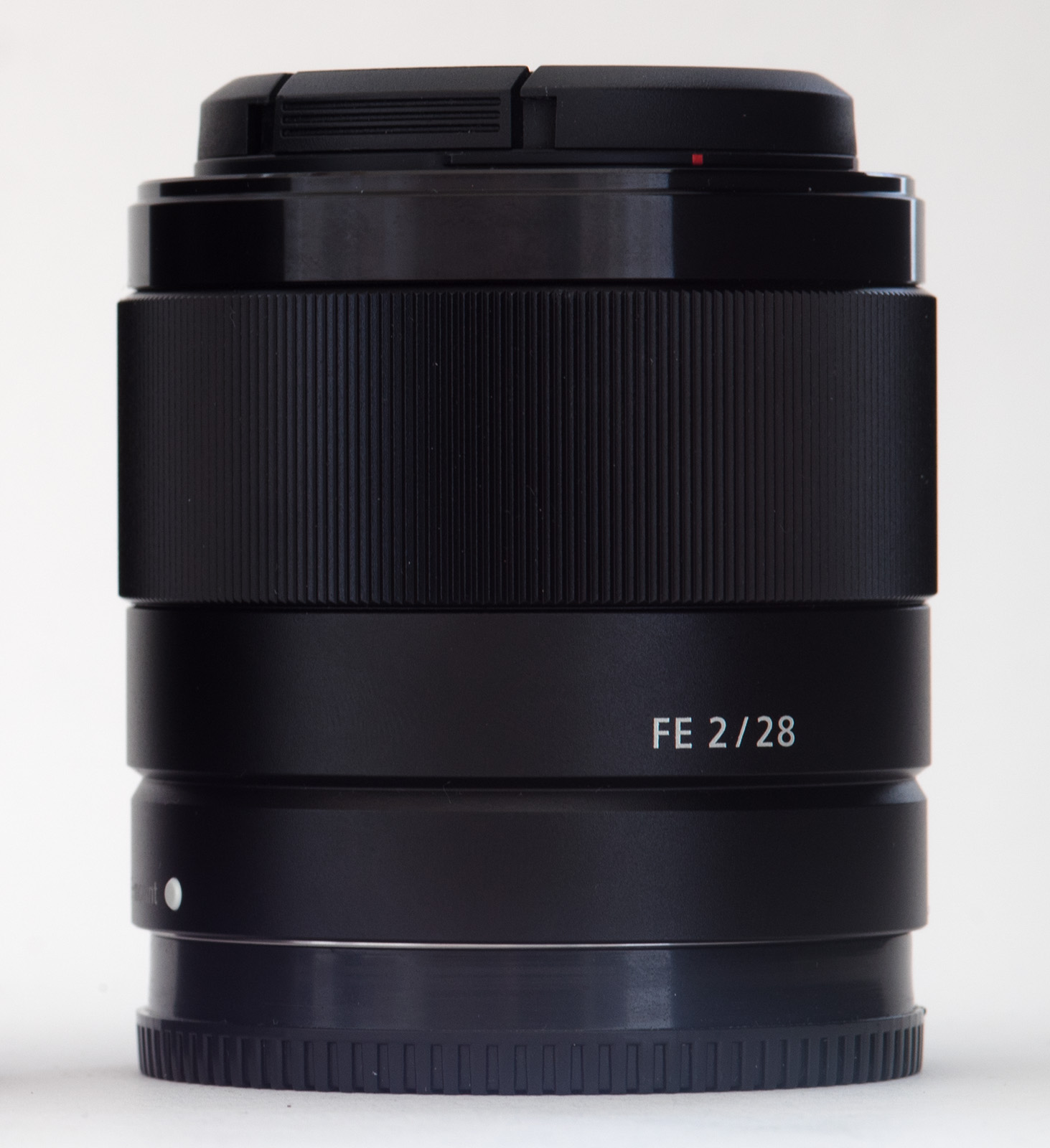
Lens Review - Sony FE 28mm f/2.0

For over a year I have been using the full spectrum A7 with only manual lenses (Nikon and various other legacy glass). I recently bought and tested the Carl Zeiss Sonnar FE 55mm f/1.8 and found it to be the best infra-red performer I've ever seen! If you're thinking "of course it's good, it's an expensive Zeiss lens" think again, as I've heard reports of bad hot spot performance in almost every other Zeiss lens for the Sony FE system.

This 28mm is the cheapest prime lens for the FE system by quite a bit. It has a surprisingly fast f/2 aperture for its price too and although it's not that small (what fast FE lens is?) it is quite light. In the handfull of tests that I've seen for this lens it comes out pretty well for visible colour, but let's see what kind of skillz it has with infra-red...

      Stats
● Mount: Sony FE
● Adapts to DSLR: No
● Adapts to (other) ILC: No
● Focal Length (FF): 28mm 
● Field of view (FF): 75°
● Lens Elements: 9
● Lens Groups: 8
 Aspherical Elements: 3 (1 Advanced + 2 ED)
● Aperture range (f stop): 2.0 - 22
● F-stop increments: 1/3
 Aperture Blades: (curved)
 Aperture Ring: No
 Autofocus: Yes (silent)
 Manual Focus Ring: By Wire
● Min. Focus Distance (cm): 29
● Max Reproduction Ratio: 1:7.7
 Internal Focus: Yes
 DoF Scale: No
 IR offset markings: No
 Body Material: Metal
 Filter Thread Material: Plastic
● Filter thread: 49mm
 Static Filter Rotation: Yes
● Dimensions (mm): 64 x 60
● Weight (g): 200
 Dust / Moisture Sealed: Yes
 Mount Seal: No
● Manufacture Country: China
● Manufacturing Span: 2014 >
● Price New: £240 - 400
● Price Second Hand: £220-300
● Accessories (Included): Hood

     Quick IR Performance Scores
 Pure IR HotSpot (Lack of): 5/10
 Colour IR HotSpot (Lack of): 5/10
 IR Sharpness (Middle): 6/10
 IR Sharpness (Edges @ f/8): 4/10
 IR Sharpness (Edges @ f/2): 2/10


IR Quality / Hot Spot
Here's a new set of images, a test for IR hot spot that I'm trying out (see more about it here). Basically what you're looking for here is a clean dark sky, with no bright spots.

This lens does vignette fairly heavily wide open and that can look like a large hotspot, but most of this is not. You'll find the hot spot more obvious here closer to the bottom of the set. This 850nm IR filter shows a patternef spot starting to get anmoying at f/8 here, but if a clean sky is important to you then even f/4 is still an issue. To some extent the hot spot is always there, it just gets larger, more blurred and subtle as the aperture opens up. Since this is the worst case scenario here f/8 is almost always fine under normal shooting conditions and mostly so is f/11. Thus I would say this lens is generally acceptable in relation to the hot spot issue. If you're someone who shoots pure infra-red at f/16 - f/22 often then I'd recommend you think carefully before buying this lens.


Here is a video to show the hot spot performance at f/22. This helps show how related to the bright areas of the scene they are. Unlike a standard circular spot these are not very easy to remove and compensate for.


This next set was shot using a Hoya R25A filter. On a full spectrum camera this is very similar to a 590nm conversion.


Although the sky wasn't quite so clear when I took this set with the R25A filter you can still see how much cleaner the colour infra-red is compared to the pure 850nm B&W samples. This could be partially because of less IR light coming through the filter, but also because of the reduced contrast in the scene. All the noticeable hotspot here is contained in the blue channel, not that it's much comfort if you're trying to process a colour IR image.

Check out these next couple of samples to see how some particularly high contrast scenes can be problematic, even at wider apertures. These are both shot at f/8, which is much more distressing. The bright spot here shows up very clearly on the tree trunk. I'm showing two samples here to show how the spot moves and confirm that it's not a fluke light on the tree itself.


Lens Flare
Here are some samples at different wavelengths to show how it copes with unavoidable lens flare in each. These are all shot at f/8. As you can see the more infra-red light that comes through the filter the more obvious the flare becomes. It's actually very good in colour and even when external filters are used like this. In IR however it looks downright horrible. I wouldn't advise shooting into the sun when taking infra-red photography on this lens.

 Kolari Vision Hot Mirror (Colour)

 Hoya R25A (Red / 590nm)

B+W 093 (850nm IR)

Sharpness
When I did a test between colour, UV and IR filters recently I got a lot of good comparison samples for this lens at different wavelengths. The difference in sharpness between the colour shots and all infra-red ones was quite noticeable. It was obvious overall, but in the corners it was especially apparent. All the shots were taken on a tripod and with accurate autofocus so I knew it was a fair test. I was unhappy with this lenses IR shots before this test and after looking closely at these samples I could now see exactly why. Click the image below to see the comparisons for yourself. It even shows up on these compressed samples at less than 2 mega-pixels, thus they certainly don't stand up scrutiny at 24mp (nearly fourteen times the size).


Competition
Like most Sony lenses there isn't much in the way of competition for autofocus lenses (yet), but there is more here than with the 50mm FOV. There is now a 25mm f/2 in the form of the new Zeiss Batis, which is a high performance lens and has the added size, weight and cost associated with the brand. You could also get a Canon EF 28mm f/1.8 with an AF adapter. It might be a little faster than the Sony lens, but focusing will be sluggish on the first four A7 bodies. A potentially larger issue is the size and price by comparison (not including the cost of the adapter). I actually paid £100 less for the Sony 28mm lens (with a cashback deal) than the Canon usually costs.

If you're willing to forgo autofocus and buy second hand primes there are many options, but it will be hard to save money while keeping decent image quality and the relatively fast f/2 aperture. Although some old 28mm f/2 lenses can be picked up from companies like Vivitar or Sigma for a little less money, they tend to be rather lacking in corner quality. Models from Pentax, Canon and Nikon are interesting for their image quality, but they cost as much or more than the autofocus Sony. Although the adapters for them can be cheap they make the lenses quite a bit bigger and heavier too. Mostly front heavy & oddly balanced compared to the Sony 28mm.

The Leica M mount Voigtlander Ultron (with adapter) will be a better match for the size and performance of the Sony lens (albeit it a bit heavier), however it will cost more, have an odd filter size and still be without autofocus. On the flip side it does look cool on the A7 bodies (or retro, or hipster, depending on your opinion).


Conclusions 
I wish there were more lenses like this for the Sony A7 series FE mount - Primes with faster apertures, at a more reasonable price (and quality). If there were I'm sure that the Sony A7 series would be even more popular than it is already. Perhaps Sony are hoping that 3rd party lens makers will fill these gaps later, but that was a risky strategy when they started out. Now that they've done so well there's a much bigger chance of that happening. Thus I feel much better recommending the system to people on a modest budget these days, but it certainly wasn't like that, even a year ago. As it stand right now, this Sony 28mm f/2 feels like the odd one out in an exclusive, high-end catalog. The FE lens collection is growing fast though, so this could change with the next announcement. I'm certainly crossing my fingers for more lenses like this soon.

In visible colour this lenses is a brilliant addition to the FE system and a game-changer for value primes, but... for infra-red I'm not at all convinced. Its IR quality just doesn't match that of its colour performance. It's like a totally different lens in infra-red and that's a real shame because this could have been a very nice walk-around landscape lens indeed. The hotspot that it produces isn't even the main problem. It's not the most extreme hot spot I've seen, nor does it show up often during normal shooting, it can just be problematic at times. The main issue here is sharpness (and to a lesser extent contrast). Infra-red photography can be passable, but it just never seems to shine. Clarity is generally low. Corners start to get better when stopping down heavily, but not long before diffraction becomes a problem. Now I'm making it sound plain horrible here and that's quite not fair.

Perhaps I've been spoiled by the insane performance of the Zeiss FE 55mm, but I do feel that if you're someone who zooms in on your photos to revel in their beauty in any way you won't be happy with this lens for infra-red.

General Pros and Cons
    Pros (rated out of 10 for how awesome they are)
(9) - Accurate and silent auto focus
(7) - Good construction (metal... mostly) and great balance with the camera
(6) - A great value prime lens for Sony FE at last (although not really for IR)
(4) - Included lens hood is nice

    Cons (rated out of 10 for how annoying they are)
(9) - Infra-red is noticeably less sharp and especially in the corners
(8) - Nasty looking lens flare in IR
(6) - Hot Spot can be problematic
(5) - Focus by wire speed is inconsistent, lack of feedback make it difficult to use
(5) - No Aperture ring
(3) - Plastic filter thread (forgivable at this price though)
(1) - Vignette could be better


Overall Score (Colour IR): 4/10
Overall Score (pure IR): 4/10
Below Average IR Performance


   IR Samples
Here are some b&w infra-red images, taken with the B+W 093 filter (on the full spectrum Sony A7). This filter has a 50% transmission at 850nm (the amount of visible light that passes through this filter is nominal).

 f/4

 f/11

  f/8

  f/11

 f/11

Here are some colour infra-red photos taken with the Hoya R25A (Red) filter (on the full spectrum Sony A7). This is equivalent to about a 590nm conversion. All images are processed using the 'false colour' technique:


 f/8

f/11


f/22

This last example shows the real-world colours (before WB / channel manipulation), exposure and tones of the hot mirror, 850nm and Hoya R25A filters together. The overlapping of the first two show a near black image. This illustrates what happens when an IR filter in front of a normal (non-converted) camera. The latter two show that a low wavelength conversion can be switched to a higher one by using external filters.

f/5.6

Bonus - Multi-Spectrum Sample
This lens seemed to like UV a bit better than it did IR. It was more sensitive than the Zeiss 55mm f/1.8 even though it wasn't quite as fast. Here is a test shot of it using the Baader-U UV filter showing some sunscreen. The shoulder stripe had just been applied here, but the sunscreen on the face was applied 3 hours before and been washed just before taking this image. Showing that it does stand up to water somewhat, like it is supposed to.


Thursday, 22 October 2015

Photo Walk - The Sky Garden

It's been way too long since I've made one of these 'photo walk' posts for IR. I have taken many infra-red photos while exploring lately, so I hope to do more posts like this soon. Here's something a little different from central London - 'The Sky Garden', at 20 Fenchurch Street.

Zeiss Sonnar 55/1.8 - 1/60th, f/5.6, iso 160 - B+W 093 filter

The building is otherwise known as the 'Walkie Talkie'. If you're not familiar with the name, it's not that weird, most of the skyscrapers here have nicknames (Cheese Grater, Gherkin etc. - shown above). This is one of the newest and it's infamous for melting things when it was first built (with it's parabolic mirror surface you see here). It has a lovely viewing deck on the top, as well as a bar, a garden (of course) and a couple of restaurants. It's free to get in, you just need to book in advance, queue for about 30 mins and bring photo ID with your ticket. Then the 'standard' metal detector shenanigans. OK that sounds like a pain, but it's worth it I promise.

We booked an appointment to visit this place a while ago and when it finally came time to go the Carl Zeiss Sonnar FE 55mm f/1.8 lens had just turned up. I'd spend a day or so with it, so of course I was itching to take more photos. All but one of the photos you'll see here was taken with it, so I will put details underneath each shot, as well as exposure info, so you can tell which it is.

Above: This first shot was taken from the top of the 'Monument'. It cost £4 to climb this tiny spiral staircase. It's not for the claustrophobic, but I appreciated this higher angle. I photoshoped a crane out on the right side of this image because it was rather distracting.
Below: The next shot was taken from the ruined church - 'Saint Dunstan In The East', which is a beautiful place to visit in it's own right. I will show a shot looking down into here later on.

Zeiss Sonnar 55/1.8 - 1/100th, f/5.6, iso 100 - B+W 093 filter

Zeiss Sonnar 55/1.8 - 1/60th, f/4, iso 200 - B+W 093 filter

Above: From the north of the building you're surrounded by a few skyscrapers. On the right here is the famous 'Lloyds Building'. I love this street for its eclectic mix of architecture styles. It was good before 20 Fenchurch Street was built and now it's even more of a mix.
Below: More older buildings, with some lovely details, on 'Lower Thames Street'. The details you see on this side of the 'Walkie Talkie' are shapes to break up the reflections and make them less damaging from that magnifying curve.

Zeiss Sonnar 55/1.8 - 1/60th, f/8, iso 100 - B+W 093 filter

Zeiss Sonnar 55/1.8 - 1/60th, f/8, iso 100 - B+W 093 filter

Above: Here's a modern buildings on the south east side.

     From Up Top
Here are some shot from inside 'The Sky Garden'. There is quite a big area to move around up here. It has plants beside the steps that go up each side of the room. These steps span three floors (35th to the 37th) and give access to the restaurants and some extra seating.

Sony 28/2 - 1/40th, f/4, iso 160 - B+W 093 filter

Above: This is from the back of the building, on a highest level. The main, open viewing deck at the front is on the lower 35th floor. I switched to the Sony 28mm f/2 lens for a couple of shots, just to show the interior better. This was the only one that I liked. In hindsight I wish I'd taken more from this lens and more colour shots with it too, but I was a little too eager to use the Zeiss lens and get as many samples as possible.

From this point on the images looking down into the city are taken from the main viewing platform, on the 35th floor (looking south).

Below: This first shot shows the 'curvy' little town hall building and H.M.S. Belfast, on the south bank of the Thames.

Zeiss Sonnar 55/1.8 - 1/60th, f/4, iso 400 - B+W 093 filter

     Colour Infra-red Photos
All of the remaining images are taken using the Hoya R25A (red) filter. This is equivalent to about a 590nm converted IR camera. This combination of red light and the entire near infra-red part of the spectrum makes the camera slightly more sensitive to light than 'normal', visible colour and thus gives slightly faster shutter speeds.

Below: This shot looks down into the overgrown church ruins of 'Saint Dunstan In The East'.

Zeiss Sonnar 55/1.8 - 1/60th, f/8, iso 200 -Hoya R25A filter

Zeiss Sonnar 55/1.8 - 1/100th, f/7.1, iso 100 -Hoya R25A filter

Zeiss Sonnar 55/1.8 - 1/80th, f/8, iso 100 -Hoya R25A filter

Zeiss Sonnar 55/1.8 - 1/1600th, f/2.5, iso 100 -Hoya R25A filter

Zeiss Sonnar 55/1.8 - 1/125th, f/7.1, iso 100 -Hoya R25A filter

Above, you can see one of the restaurants in the top right. This was taken from the middle floor. Below, you can better see how the foliage is constrained to the sides of the structure, around the steps.

Zeiss Sonnar 55/1.8 - 1/80th, f/7.1, iso 100 -Hoya R25A filter

Zeiss Sonnar 55/1.8 - 1/60th, f/8, iso 125 -Hoya R25A filter

     Fake Tilt-Shift Photos
These last few images are processed (in Photoshop CC) using hand painted masks to control a 'Lens Blur' filter. The goal is to make these images look like a miniature model, but simulating an unnaturally shallow depth of field.

Similar to the first black & white city photo, this colour infra-red shot highlights H.M.S. Belfast. Although quite subtle, I put the focus on the ship, to help draw the eye to it. Making the mask for this involved some rather fiddly mask painting around the spindly details at the top of the ship.

Zeiss Sonnar 55/1.8 - 1/100th, f/5.6, iso 100 -Hoya R25A filter

Zeiss Sonnar 55/1.8 - 1/125th, f/5.6, iso 100 -Hoya R25A filter

Above: The 'Shard' is pretty much directly south from 'The Sky Garden'. Below and to the left of that is London Bridge station, which is a rail and underground station.
Below: The ikonic 'Tower Bridge, which connects the 'Tower Of London' (old castle), in the north with the 'Town Hall' and H.M.S. Belfast again, on the south bank.

Zeiss Sonnar 55/1.8 - 1/125th, f/5.6, iso 100 -Hoya R25A filter

Below: Here is the mask use to make the above image:


This took about an hour or so to make and is just about good enough to get the effect that I wanted. I could have spent more time masking off more buildings to get the correct values, but it tends to get muddied and rather time consuming after the main subject has been done.

If you've seen real tilt-shift images basically what they are doing is the gradient underneath and not the mask of the building. They can't actually alter the depth of field, only blur the top and bottom of an image. So although they can give a nicer 'lens blur' effect they can't quite do this separation of subjects.