Showing posts with label Filter. Show all posts

Monday, 26 October 2015

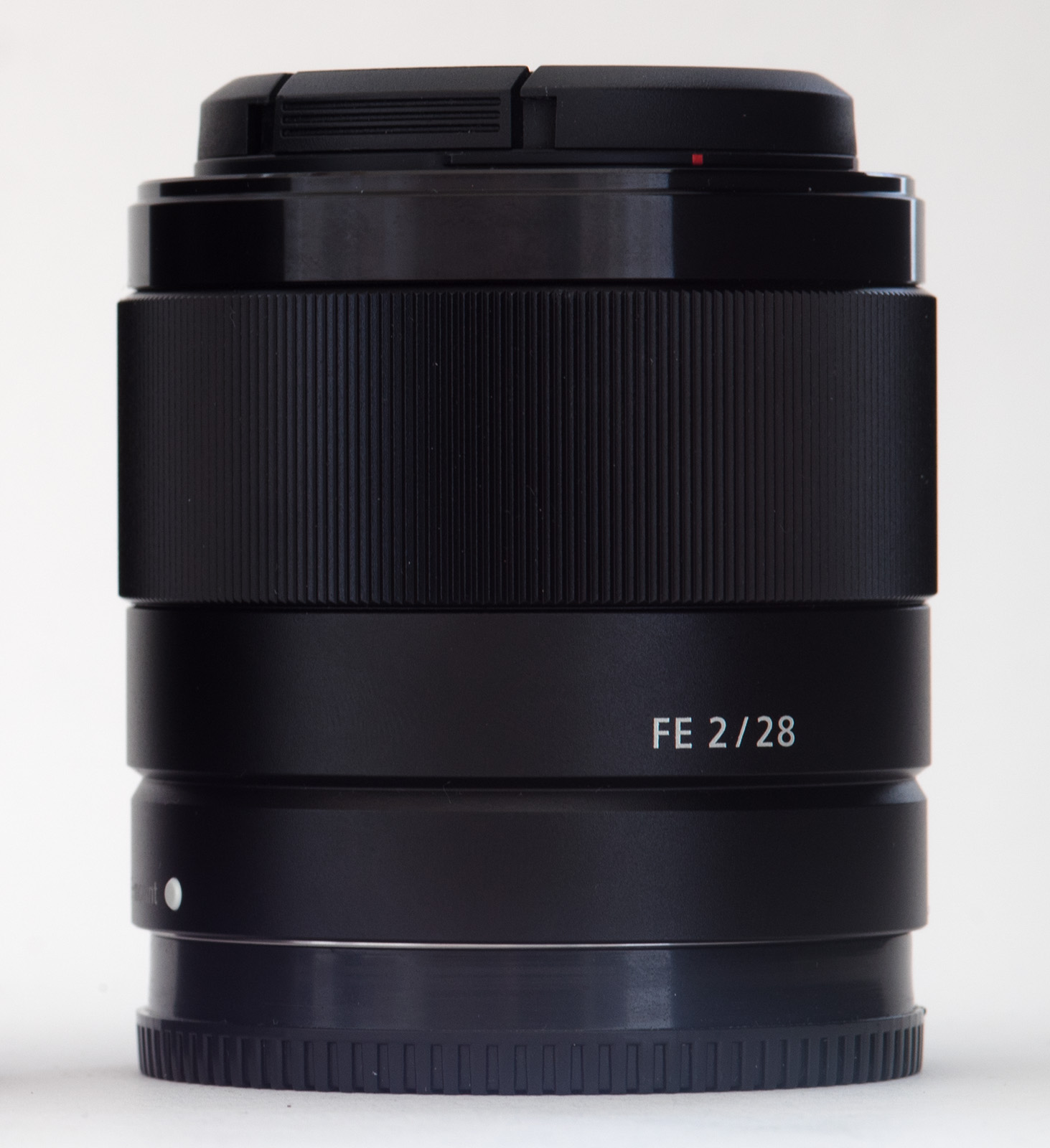
Lens Review - Sony FE 28mm f/2.0

For over a year I have been using the full spectrum A7 with only manual lenses (Nikon and various other legacy glass). I recently bought and tested the Carl Zeiss Sonnar FE 55mm f/1.8 and found it to be the best infra-red performer I've ever seen! If you're thinking "of course it's good, it's an expensive Zeiss lens" think again, as I've heard reports of bad hot spot performance in almost every other Zeiss lens for the Sony FE system.

This 28mm is the cheapest prime lens for the FE system by quite a bit. It has a surprisingly fast f/2 aperture for its price too and although it's not that small (what fast FE lens is?) it is quite light. In the handfull of tests that I've seen for this lens it comes out pretty well for visible colour, but let's see what kind of skillz it has with infra-red...

      Stats
● Mount: Sony FE
● Adapts to DSLR: No
● Adapts to (other) ILC: No
● Focal Length (FF): 28mm 
● Field of view (FF): 75°
● Lens Elements: 9
● Lens Groups: 8
 Aspherical Elements: 3 (1 Advanced + 2 ED)
● Aperture range (f stop): 2.0 - 22
● F-stop increments: 1/3
 Aperture Blades: (curved)
 Aperture Ring: No
 Autofocus: Yes (silent)
 Manual Focus Ring: By Wire
● Min. Focus Distance (cm): 29
● Max Reproduction Ratio: 1:7.7
 Internal Focus: Yes
 DoF Scale: No
 IR offset markings: No
 Body Material: Metal
 Filter Thread Material: Plastic
● Filter thread: 49mm
 Static Filter Rotation: Yes
● Dimensions (mm): 64 x 60
● Weight (g): 200
 Dust / Moisture Sealed: Yes
 Mount Seal: No
● Manufacture Country: China
● Manufacturing Span: 2014 >
● Price New: £240 - 400
● Price Second Hand: £220-300
● Accessories (Included): Hood

     Quick IR Performance Scores
 Pure IR HotSpot (Lack of): 5/10
 Colour IR HotSpot (Lack of): 5/10
 IR Sharpness (Middle): 6/10
 IR Sharpness (Edges @ f/8): 4/10
 IR Sharpness (Edges @ f/2): 2/10


IR Quality / Hot Spot
Here's a new set of images, a test for IR hot spot that I'm trying out (see more about it here). Basically what you're looking for here is a clean dark sky, with no bright spots.

This lens does vignette fairly heavily wide open and that can look like a large hotspot, but most of this is not. You'll find the hot spot more obvious here closer to the bottom of the set. This 850nm IR filter shows a patternef spot starting to get anmoying at f/8 here, but if a clean sky is important to you then even f/4 is still an issue. To some extent the hot spot is always there, it just gets larger, more blurred and subtle as the aperture opens up. Since this is the worst case scenario here f/8 is almost always fine under normal shooting conditions and mostly so is f/11. Thus I would say this lens is generally acceptable in relation to the hot spot issue. If you're someone who shoots pure infra-red at f/16 - f/22 often then I'd recommend you think carefully before buying this lens.


Here is a video to show the hot spot performance at f/22. This helps show how related to the bright areas of the scene they are. Unlike a standard circular spot these are not very easy to remove and compensate for.


This next set was shot using a Hoya R25A filter. On a full spectrum camera this is very similar to a 590nm conversion.


Although the sky wasn't quite so clear when I took this set with the R25A filter you can still see how much cleaner the colour infra-red is compared to the pure 850nm B&W samples. This could be partially because of less IR light coming through the filter, but also because of the reduced contrast in the scene. All the noticeable hotspot here is contained in the blue channel, not that it's much comfort if you're trying to process a colour IR image.

Check out these next couple of samples to see how some particularly high contrast scenes can be problematic, even at wider apertures. These are both shot at f/8, which is much more distressing. The bright spot here shows up very clearly on the tree trunk. I'm showing two samples here to show how the spot moves and confirm that it's not a fluke light on the tree itself.


Lens Flare
Here are some samples at different wavelengths to show how it copes with unavoidable lens flare in each. These are all shot at f/8. As you can see the more infra-red light that comes through the filter the more obvious the flare becomes. It's actually very good in colour and even when external filters are used like this. In IR however it looks downright horrible. I wouldn't advise shooting into the sun when taking infra-red photography on this lens.

 Kolari Vision Hot Mirror (Colour)

 Hoya R25A (Red / 590nm)

B+W 093 (850nm IR)

Sharpness
When I did a test between colour, UV and IR filters recently I got a lot of good comparison samples for this lens at different wavelengths. The difference in sharpness between the colour shots and all infra-red ones was quite noticeable. It was obvious overall, but in the corners it was especially apparent. All the shots were taken on a tripod and with accurate autofocus so I knew it was a fair test. I was unhappy with this lenses IR shots before this test and after looking closely at these samples I could now see exactly why. Click the image below to see the comparisons for yourself. It even shows up on these compressed samples at less than 2 mega-pixels, thus they certainly don't stand up scrutiny at 24mp (nearly fourteen times the size).


Competition
Like most Sony lenses there isn't much in the way of competition for autofocus lenses (yet), but there is more here than with the 50mm FOV. There is now a 25mm f/2 in the form of the new Zeiss Batis, which is a high performance lens and has the added size, weight and cost associated with the brand. You could also get a Canon EF 28mm f/1.8 with an AF adapter. It might be a little faster than the Sony lens, but focusing will be sluggish on the first four A7 bodies. A potentially larger issue is the size and price by comparison (not including the cost of the adapter). I actually paid £100 less for the Sony 28mm lens (with a cashback deal) than the Canon usually costs.

If you're willing to forgo autofocus and buy second hand primes there are many options, but it will be hard to save money while keeping decent image quality and the relatively fast f/2 aperture. Although some old 28mm f/2 lenses can be picked up from companies like Vivitar or Sigma for a little less money, they tend to be rather lacking in corner quality. Models from Pentax, Canon and Nikon are interesting for their image quality, but they cost as much or more than the autofocus Sony. Although the adapters for them can be cheap they make the lenses quite a bit bigger and heavier too. Mostly front heavy & oddly balanced compared to the Sony 28mm.

The Leica M mount Voigtlander Ultron (with adapter) will be a better match for the size and performance of the Sony lens (albeit it a bit heavier), however it will cost more, have an odd filter size and still be without autofocus. On the flip side it does look cool on the A7 bodies (or retro, or hipster, depending on your opinion).


Conclusions 
I wish there were more lenses like this for the Sony A7 series FE mount - Primes with faster apertures, at a more reasonable price (and quality). If there were I'm sure that the Sony A7 series would be even more popular than it is already. Perhaps Sony are hoping that 3rd party lens makers will fill these gaps later, but that was a risky strategy when they started out. Now that they've done so well there's a much bigger chance of that happening. Thus I feel much better recommending the system to people on a modest budget these days, but it certainly wasn't like that, even a year ago. As it stand right now, this Sony 28mm f/2 feels like the odd one out in an exclusive, high-end catalog. The FE lens collection is growing fast though, so this could change with the next announcement. I'm certainly crossing my fingers for more lenses like this soon.

In visible colour this lenses is a brilliant addition to the FE system and a game-changer for value primes, but... for infra-red I'm not at all convinced. Its IR quality just doesn't match that of its colour performance. It's like a totally different lens in infra-red and that's a real shame because this could have been a very nice walk-around landscape lens indeed. The hotspot that it produces isn't even the main problem. It's not the most extreme hot spot I've seen, nor does it show up often during normal shooting, it can just be problematic at times. The main issue here is sharpness (and to a lesser extent contrast). Infra-red photography can be passable, but it just never seems to shine. Clarity is generally low. Corners start to get better when stopping down heavily, but not long before diffraction becomes a problem. Now I'm making it sound plain horrible here and that's quite not fair.

Perhaps I've been spoiled by the insane performance of the Zeiss FE 55mm, but I do feel that if you're someone who zooms in on your photos to revel in their beauty in any way you won't be happy with this lens for infra-red.

General Pros and Cons
    Pros (rated out of 10 for how awesome they are)
(9) - Accurate and silent auto focus
(7) - Good construction (metal... mostly) and great balance with the camera
(6) - A great value prime lens for Sony FE at last (although not really for IR)
(4) - Included lens hood is nice

    Cons (rated out of 10 for how annoying they are)
(9) - Infra-red is noticeably less sharp and especially in the corners
(8) - Nasty looking lens flare in IR
(6) - Hot Spot can be problematic
(5) - Focus by wire speed is inconsistent, lack of feedback make it difficult to use
(5) - No Aperture ring
(3) - Plastic filter thread (forgivable at this price though)
(1) - Vignette could be better


Overall Score (Colour IR): 4/10
Overall Score (pure IR): 4/10
Below Average IR Performance


   IR Samples
Here are some b&w infra-red images, taken with the B+W 093 filter (on the full spectrum Sony A7). This filter has a 50% transmission at 850nm (the amount of visible light that passes through this filter is nominal).

 f/4

 f/11

  f/8

  f/11

 f/11

Here are some colour infra-red photos taken with the Hoya R25A (Red) filter (on the full spectrum Sony A7). This is equivalent to about a 590nm conversion. All images are processed using the 'false colour' technique:


 f/8

f/11


f/22

This last example shows the real-world colours (before WB / channel manipulation), exposure and tones of the hot mirror, 850nm and Hoya R25A filters together. The overlapping of the first two show a near black image. This illustrates what happens when an IR filter in front of a normal (non-converted) camera. The latter two show that a low wavelength conversion can be switched to a higher one by using external filters.

f/5.6

Bonus - Multi-Spectrum Sample
This lens seemed to like UV a bit better than it did IR. It was more sensitive than the Zeiss 55mm f/1.8 even though it wasn't quite as fast. Here is a test shot of it using the Baader-U UV filter showing some sunscreen. The shoulder stripe had just been applied here, but the sunscreen on the face was applied 3 hours before and been washed just before taking this image. Showing that it does stand up to water somewhat, like it is supposed to.


Thursday, 22 October 2015

Photo Walk - The Sky Garden

It's been way too long since I've made one of these 'photo walk' posts for IR. I have taken many infra-red photos while exploring lately, so I hope to do more posts like this soon. Here's something a little different from central London - 'The Sky Garden', at 20 Fenchurch Street.

Zeiss Sonnar 55/1.8 - 1/60th, f/5.6, iso 160 - B+W 093 filter

The building is otherwise known as the 'Walkie Talkie'. If you're not familiar with the name, it's not that weird, most of the skyscrapers here have nicknames (Cheese Grater, Gherkin etc. - shown above). This is one of the newest and it's infamous for melting things when it was first built (with it's parabolic mirror surface you see here). It has a lovely viewing deck on the top, as well as a bar, a garden (of course) and a couple of restaurants. It's free to get in, you just need to book in advance, queue for about 30 mins and bring photo ID with your ticket. Then the 'standard' metal detector shenanigans. OK that sounds like a pain, but it's worth it I promise.

We booked an appointment to visit this place a while ago and when it finally came time to go the Carl Zeiss Sonnar FE 55mm f/1.8 lens had just turned up. I'd spend a day or so with it, so of course I was itching to take more photos. All but one of the photos you'll see here was taken with it, so I will put details underneath each shot, as well as exposure info, so you can tell which it is.

Above: This first shot was taken from the top of the 'Monument'. It cost £4 to climb this tiny spiral staircase. It's not for the claustrophobic, but I appreciated this higher angle. I photoshoped a crane out on the right side of this image because it was rather distracting.
Below: The next shot was taken from the ruined church - 'Saint Dunstan In The East', which is a beautiful place to visit in it's own right. I will show a shot looking down into here later on.

Zeiss Sonnar 55/1.8 - 1/100th, f/5.6, iso 100 - B+W 093 filter

Zeiss Sonnar 55/1.8 - 1/60th, f/4, iso 200 - B+W 093 filter

Above: From the north of the building you're surrounded by a few skyscrapers. On the right here is the famous 'Lloyds Building'. I love this street for its eclectic mix of architecture styles. It was good before 20 Fenchurch Street was built and now it's even more of a mix.
Below: More older buildings, with some lovely details, on 'Lower Thames Street'. The details you see on this side of the 'Walkie Talkie' are shapes to break up the reflections and make them less damaging from that magnifying curve.

Zeiss Sonnar 55/1.8 - 1/60th, f/8, iso 100 - B+W 093 filter

Zeiss Sonnar 55/1.8 - 1/60th, f/8, iso 100 - B+W 093 filter

Above: Here's a modern buildings on the south east side.

     From Up Top
Here are some shot from inside 'The Sky Garden'. There is quite a big area to move around up here. It has plants beside the steps that go up each side of the room. These steps span three floors (35th to the 37th) and give access to the restaurants and some extra seating.

Sony 28/2 - 1/40th, f/4, iso 160 - B+W 093 filter

Above: This is from the back of the building, on a highest level. The main, open viewing deck at the front is on the lower 35th floor. I switched to the Sony 28mm f/2 lens for a couple of shots, just to show the interior better. This was the only one that I liked. In hindsight I wish I'd taken more from this lens and more colour shots with it too, but I was a little too eager to use the Zeiss lens and get as many samples as possible.

From this point on the images looking down into the city are taken from the main viewing platform, on the 35th floor (looking south).

Below: This first shot shows the 'curvy' little town hall building and H.M.S. Belfast, on the south bank of the Thames.

Zeiss Sonnar 55/1.8 - 1/60th, f/4, iso 400 - B+W 093 filter

     Colour Infra-red Photos
All of the remaining images are taken using the Hoya R25A (red) filter. This is equivalent to about a 590nm converted IR camera. This combination of red light and the entire near infra-red part of the spectrum makes the camera slightly more sensitive to light than 'normal', visible colour and thus gives slightly faster shutter speeds.

Below: This shot looks down into the overgrown church ruins of 'Saint Dunstan In The East'.

Zeiss Sonnar 55/1.8 - 1/60th, f/8, iso 200 -Hoya R25A filter

Zeiss Sonnar 55/1.8 - 1/100th, f/7.1, iso 100 -Hoya R25A filter

Zeiss Sonnar 55/1.8 - 1/80th, f/8, iso 100 -Hoya R25A filter

Zeiss Sonnar 55/1.8 - 1/1600th, f/2.5, iso 100 -Hoya R25A filter

Zeiss Sonnar 55/1.8 - 1/125th, f/7.1, iso 100 -Hoya R25A filter

Above, you can see one of the restaurants in the top right. This was taken from the middle floor. Below, you can better see how the foliage is constrained to the sides of the structure, around the steps.

Zeiss Sonnar 55/1.8 - 1/80th, f/7.1, iso 100 -Hoya R25A filter

Zeiss Sonnar 55/1.8 - 1/60th, f/8, iso 125 -Hoya R25A filter

     Fake Tilt-Shift Photos
These last few images are processed (in Photoshop CC) using hand painted masks to control a 'Lens Blur' filter. The goal is to make these images look like a miniature model, but simulating an unnaturally shallow depth of field.

Similar to the first black & white city photo, this colour infra-red shot highlights H.M.S. Belfast. Although quite subtle, I put the focus on the ship, to help draw the eye to it. Making the mask for this involved some rather fiddly mask painting around the spindly details at the top of the ship.

Zeiss Sonnar 55/1.8 - 1/100th, f/5.6, iso 100 -Hoya R25A filter

Zeiss Sonnar 55/1.8 - 1/125th, f/5.6, iso 100 -Hoya R25A filter

Above: The 'Shard' is pretty much directly south from 'The Sky Garden'. Below and to the left of that is London Bridge station, which is a rail and underground station.
Below: The ikonic 'Tower Bridge, which connects the 'Tower Of London' (old castle), in the north with the 'Town Hall' and H.M.S. Belfast again, on the south bank.

Zeiss Sonnar 55/1.8 - 1/125th, f/5.6, iso 100 -Hoya R25A filter

Below: Here is the mask use to make the above image:


This took about an hour or so to make and is just about good enough to get the effect that I wanted. I could have spent more time masking off more buildings to get the correct values, but it tends to get muddied and rather time consuming after the main subject has been done.

If you've seen real tilt-shift images basically what they are doing is the gradient underneath and not the mask of the building. They can't actually alter the depth of field, only blur the top and bottom of an image. So although they can give a nicer 'lens blur' effect they can't quite do this separation of subjects.

Friday, 21 March 2014

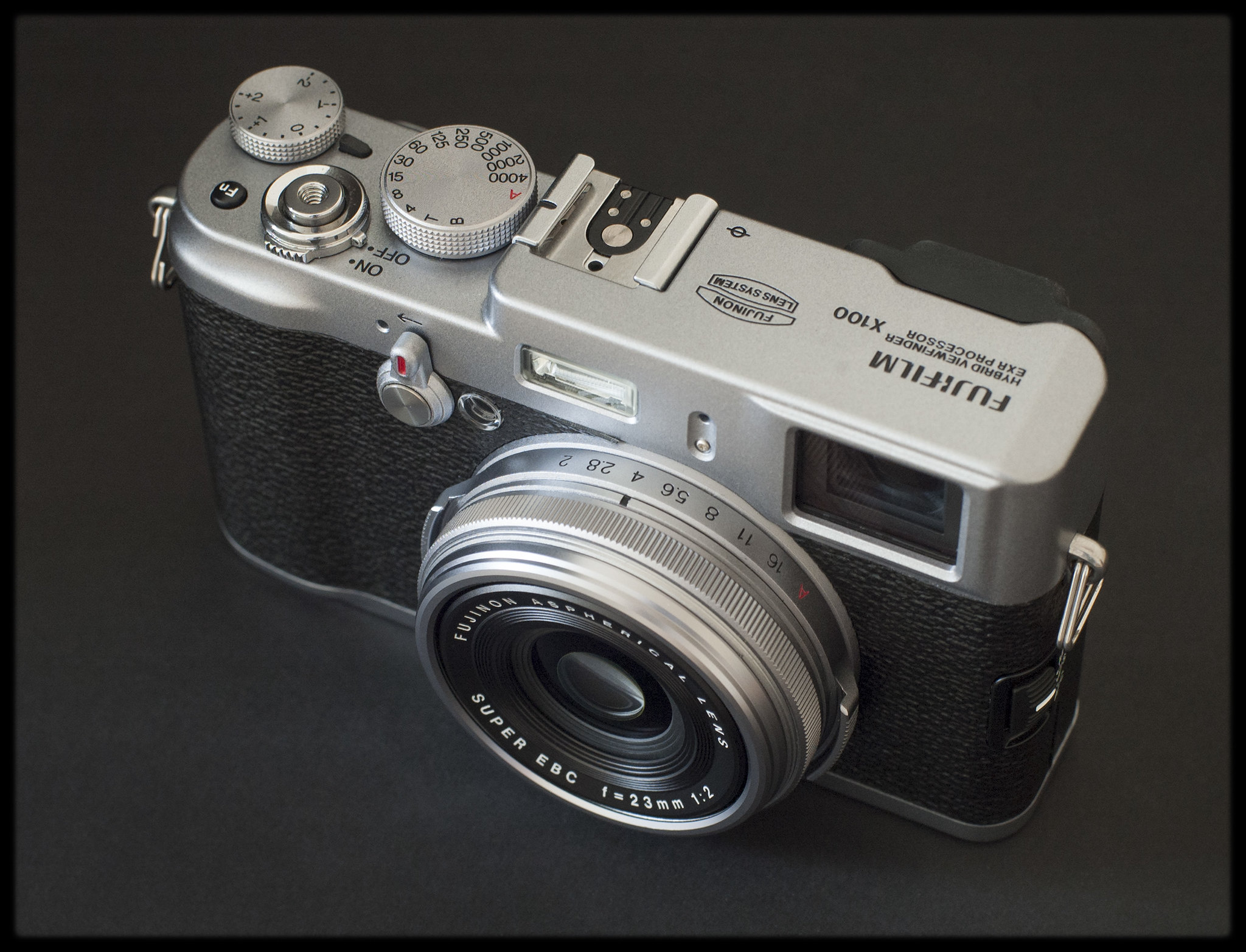
Cameras - Fuji X100 & The Hoya R72 Filter

Kew Gardens, SW London - Fuji X100, 23mm - 20 sec, f/8, iso 200

It's time for the next chapter in my infra-red camera history...

A couple of years after selling my infra-red converted Canon 40D (2008) I noticed a sharp drop off in picture taking as a whole. The main reason for this was that my remaining DSLR was a pro model and thus too big and heavy to carry around everywhere. Something needed to be done to rekindle my passion for photography, so I started to look for something more compact. I wanted to keep the really high image quality and good manual controls, just lose all the bulk.

I'd followed the Fuji X100 from its announcement. I loved the looks and features, but initially dismissed it because of a relatively high price and a couple of feature niggles. A year on and the price dropped drastically however. It was then available for around half the original asking price on Fuji's refurbished website. I couldn't ignore it any more, so I finally bought one and boy was I not disappointed.

Nikon D70s, 50mm - 5 sec, f/8, iso400

   Controls - The Way They Were Meant To Be
It might look like a hipster's wet dream (well from the front anyway), but the retro dials are even more amazing to use than they are to look at. Apart from some fiddly iso controls (an auto iso toggle button would have been perfect) it's an extremely easy camera to use. The image quality produced by the sensor is superb for such a small camera. The clever optical and electronic viewfinder are large and very well implemented, but more on that in a minute. The effective 35mm prime lens is incredibly small, great in low light and has very decent image quality. I already love prime lenses, but if you're not concerned about the possible inflexibility I strongly advise you reconsider. 35mm is good for most 'normal' photography and a pretty great angle to be stuck with while travelling, just check out some samples from the X100.

   Killer Feature
Well, I could go on about Fuji and the X100 for ages, but "what has this got to do with infra-red?" I hear you ask. Well, unlike most modern cameras, the X100's internal UV/IR cut filter is not particularly aggressive - about 11 stops. OK, so that's not exactly subtle either, but some of the X100's other features step up to make it a viable hand-held infra-red camera. The wide aperture lens and great high iso performance from the APS-C sensor push the exposures back into an acceptable range. The first image that I posted above was taken on a tripod, which is all well and good, but let's prove the hand-held shooting ability of the X100...

Highgate Cemetary, London - Fuji X100, 23mm - 1/15th, f/2, iso3200

This infra-red photo was taken under the canopy of trees. This was a hand-held shot of a moving subject. It's not the best example of an infra-red image, since none of the cat's tones look any different to colour, but it does help illustrate the camera's potential. This image is a little noisy, but considering the camera is fairly new, not converted and the conditions for the photo are mildly tricky this is pretty impressive. 

All this adds up to a camera that can shoot infra-red images without the need of a costly and damaging conversion. Not that it's possible, I actually tried once. On that note I think it would be a fantastic idea to have the camera as 'full-spectrum', using the internal ND filter as the UV/IR cut filter and then external filters could be used for really high quality, fast infra-red photography. This would barely affect the camera's normal colour abilities and could and would make for one heck of an IR camera!

London - Fuji X100, 23mm - 1/30th, f/2, iso1600

   What To Buy & How Much
The official 49mm Hoya R72 filter is normally priced around £50, but you can save quite a bit by shopping around, buying second hand, or getting a generic one. To attach the 49mm filter to the X100 you will also need the lens hood adapter. The official one of those is about £70, but again there are third-party ones costing much less. I think I spent £22 on my IR set up for the X100, so if you own this camera and you haven't tried out infra-red photography yet what are you waiting for?!

Kew Gardens, SW London - Fuji X100, 23mm - 1/15th, f/2, iso2000

   Viewfinders (Optical and Electronic)
The X100's mix of display types compliment it's IR abilities nicely. The option of having both optical and electronic viewfinders normally useful, but for shooting infra-red it's a huge advantage. Because the optical viewfinder (OVF) doesn't look through the lens (like an SLR), it can still be used while shooting in infra-red. The added bonus is that the electronic viewfinder (EVF) works reasonably well when shooting in IR too. Since the camera is having to boost exposure for IR the frame-rate of the EVF does suffer, but it still works well enough. Actually shooting with the EVF is advised for focusing reasons and this is not restricted to infra-red shooting. Sometimes the X100 misses focus, but acts like it's locked, so when looking through the OVF there is no feedback to tell you something's wrong.

   Game Changer
The real benefit to the EVF here is that it shows you a real-time view of the world in infra-red. This is brilliant for a number of reasons. Unlike an SLR you don't have to guess what your tones and colours look like. It makes composing a scene much easier and it looks great.

OK so an EVF is the same view you get on the back screen, or live-view on a DSLR. The problem with those is that they can't easily be seen in bright sunlight and it's these conditions that you'll need to be shooting in to get hand-held infra-red photos from a non-converted camera.

Fuji X100, 23mm - 1/15th, f/2, iso1250

   Significant Limitations?
The X100 is very usable for hand-held infra-red shooting in great weather, but take away the perfect sun and it gets depressing quickly. Dark scenes will almost certainly cause the camera's focusing to fail, but is this all bad? I mean infra-red tends to only look great in bright sunshine anyway. I wouldn't recommend shooting infra-red indoors mostly because those images are boring anyway. High levels of noise or slow shutter speeds (take your pick) will just guarantee your images will suck, but they were going to anyway so who cares.

When trying to limit the noise levels of your hand-held IR images, on the X100 you'll be stuck using the widest apertures available. I suggest locking the aperture at F/2, but what about the IR focus issues? Fear not, here is another feather in the X100's infra-red cap. Although it uses the slower contrast detect AF (unlike the X100S), this guarantees accurate AF in whichever wavelength you shoot and this makes wide apertures a non issue.

So there you have it. Not the worst limitations in the world, especially when you consider that the X100 was never built to be an infra-red camera.

Richmond, London - Fuji X100, 23mm - 10 sec, f/8, iso200

   Tripod shooting
Exposure wise you won't have much room to move when shooting hand-held, but you can of course still use a tripod if you so desire. This makes interior, low-light or base iso infra-red shots at least possible.

At base iso and stopped down to decent apertures, the X100's exposures may be too long for hand-held shooting, but for cool effects (like moving water) they're just long enough without becoming too annoying.

The main benefit to base iso is low noise levels and this makes colours infinitely more pliable when pushing their channels around. The above image was processed using the false-colour technique (red/blue channel swap). It was then pushed further still to achieve this orange/pinky cast. A hand-held shot at high iso will become undesirably grainy if processed the same way. To that end I also recommend shooting RAW when taking infra-red shots, even if you normally don't.

Hampstead Heath, London - Fuji X100, 23mm - 1/15th, f/2, iso1250

Here are some comparisons between different filters used on the X100. The top left image was taken without a filter and simply turned black and white in the RAW editor by reducing saturation. All shots were taken on a tripod so they could all be base iso. Here are some of my observations:

   650nm (Cheap, Generic)
This filter really did nothing. I'm not sure weather it was a dodgy filter (I don't think so), or that the camera would need to be converted to get the most out of this wavelength. I've seen some interesting effects from cameras using this wavelength, but i think they all had their internal UV'IR filters removed.

   720nm (Hoya R72)
This is the common Hoya R72 filter. It's great for colour and black & white shots and is what I use 99% of time on the X100. There's not much to say here accept that it works well. This is the wavelength I would recommend for anyone trying infra-red photography. It's possibly the only one you will ever need.

   760nm (Cheap, Generic)
This eliminates any colour effect from the infra-red image. Not that we're showing colour here anyway, this is all about tone. In theory the higher cut off point of the wavelength can produce more contrast, but this is so minimal that it's something you can push equally in post process. It doesn't negatively effect exposures much, but it just doesn't provide much of a difference either. The difference you see in the water are due to a duck swimming past in one shot, but not the other. The only thing that makes me thing there's a difference is the brighter tree in the middle of the photo. Still, I wouldn't bother with this filter unless you just see no point in colour IR. If you feel the need for greater contrast then I'd suggest going higher still. The 830nm (ish) B+W 093 filter will almost certainly still provide something, but much higher than that could provide nothing at all on a non-converted camera like this.

Highgate Cemetery, London - Fuji X100, 23mm - 1/15th, f/2, iso1600 (Sam Grice)

This image was taken by a friend who bought the Fuji X100 at a similar time. He used a third party filter here. It was rated at 720nm, but seems to let give slightly faster exposures so perhaps it cuts off  little lower down the spectrum (perhaps 700nm). These rather fetching colours come more from Sam's processing than the filter's character. It shows how much can be done with processing. I will go over some different image manipulation workflows in later posts.

Hampstead Heath, London - Fuji X100, 23mm - 1/30th, f/2, iso1600

Having a camera that can shoot colour and IR is great in harsh / bright conditions. When normal colour images tend to get killed by overly contrasty tones IR can keep things much more grounded. Although the highlights still blow out and flaring can be a real issue there is simply something very pleasing about the dynamic range of a sunny infra-red photo. The flexibility of the X100 helps to keep me motivated through periods where my passion would otherwise fall.

Kew Gardens, SW London - Fuji X100, 23mm - 1/15th, f/2, iso800

   Conclusion
I absolutely love the Fuji X100. The manual dials make it the nicest camera I've used so far. As an infra-red camera it is truly amazing and this is out of the box. Not needing converting means that it provides a nice jumping off point for existing X100 owners to play with infra-red for very little money. That's a rare and amazing thing. This camera has made me realise the power of the EVF, which can be used for colour and IR equally well.

I'm not sure exactly how good the X100s is for infra-red, but the internal filter seems to block about the same amount of IR light from looking on Flickr images. Although the phase detect auto-focus could cause issues with infra-red it seems to do OK. One thing is for sure and that's the improved high iso performance is nice.